
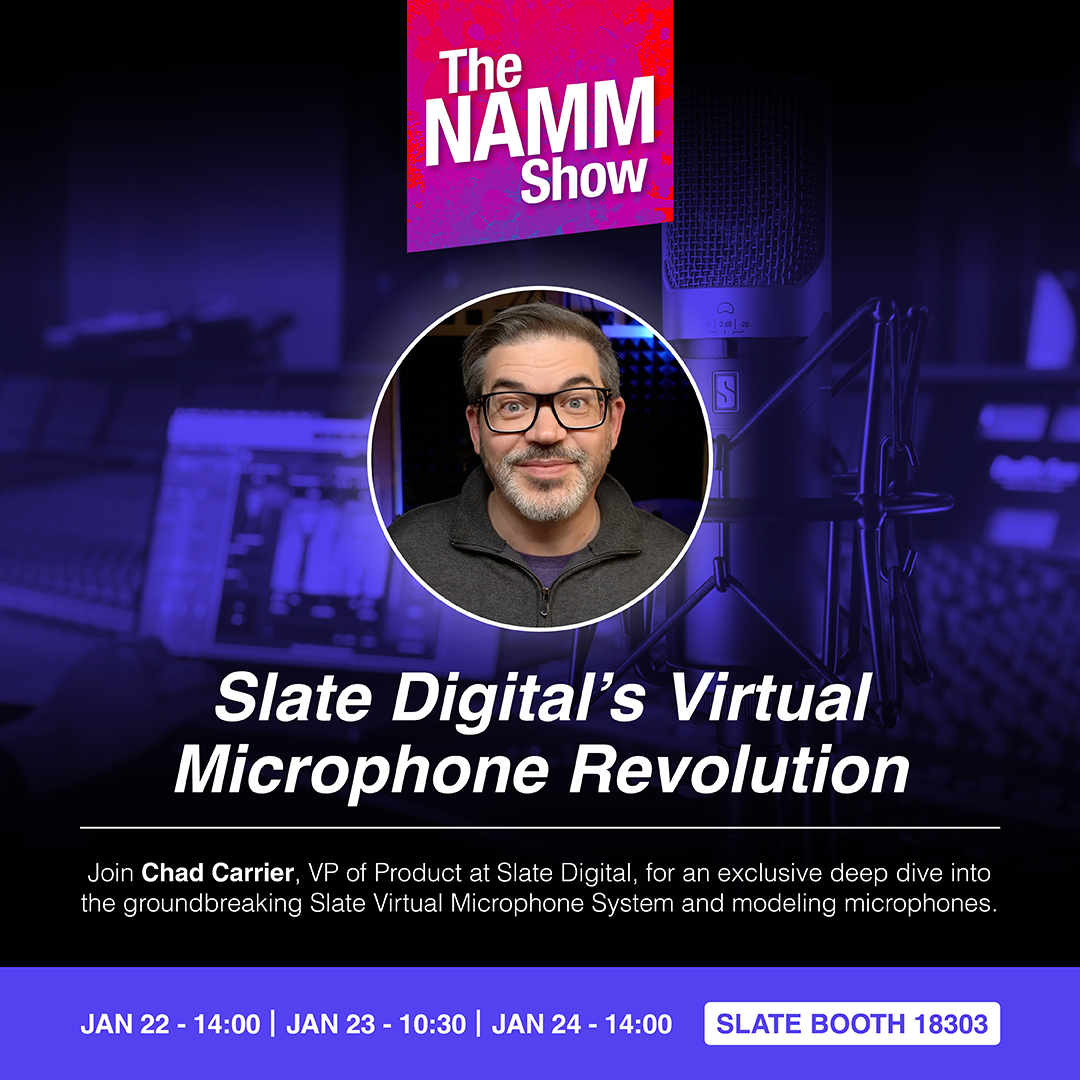
We will be exhibiting from booth 18303 and will be showcasing our latest production tools: the ML-1A and ML-2A modeling mics, plus all of the recent additions the Complete Access…
Read More

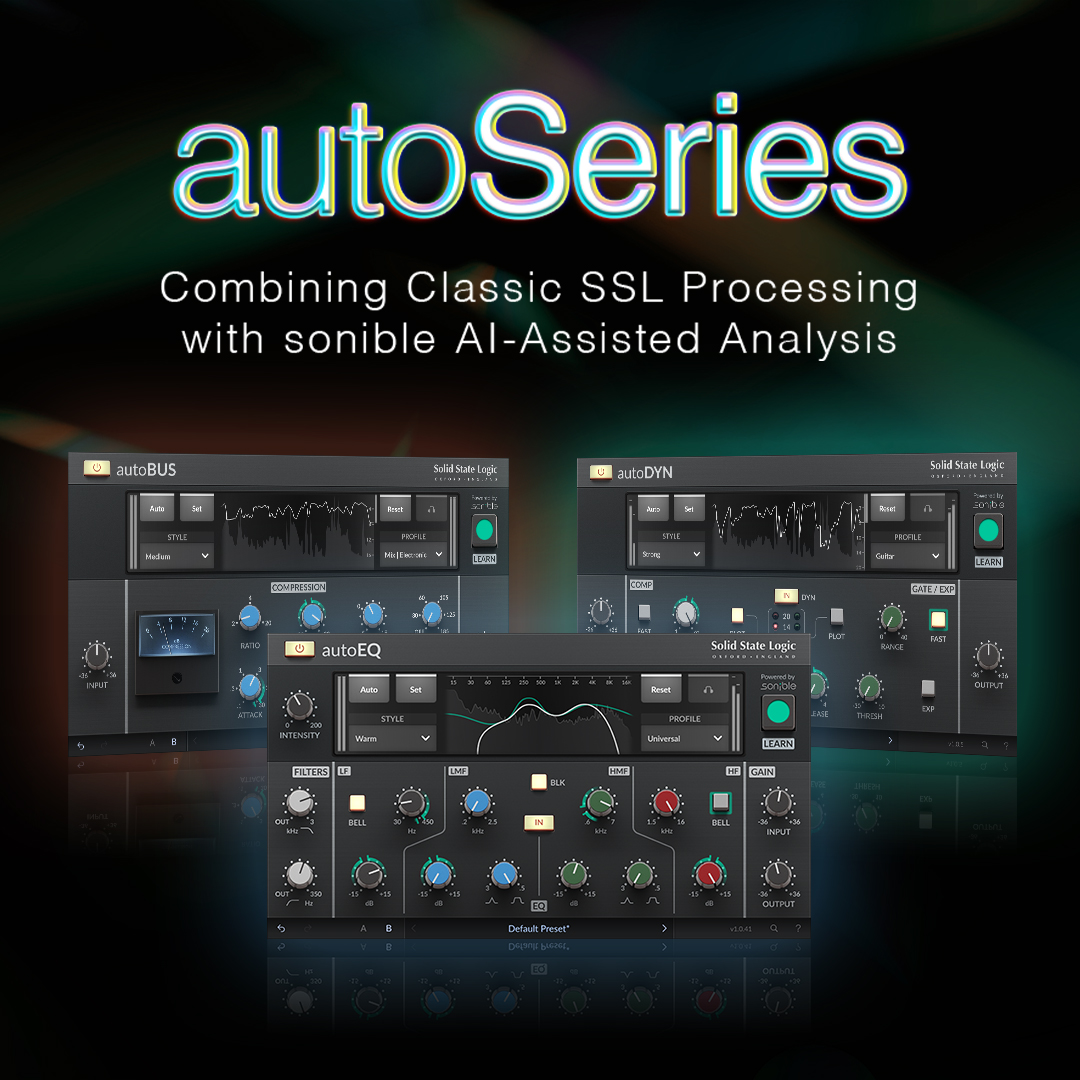

Every mix you love was shaped by a channel strip. Mic preamp, EQ, compressor, filters, routing, all in one place, fast and musical. In this free live masterclass, a pro engineer will mix a track start to finish using iconic channel strips, showing how small EQ moves, smart compression, and tonal color add up to records that translate.
Live on Zoom, Mon Dec 15, 10:00 AM ET.
Channel strips keep you moving. Instead of hunting across plugins, you get a focused path to capture, sculpt, and control tone. Learn when a vintage flavor adds weight, when a clean strip keeps transients sharp, and why different genres reach for different curves.
Producers and mixers who want consistent, musical results, less menu diving, more finished tracks.
Save your seat now.

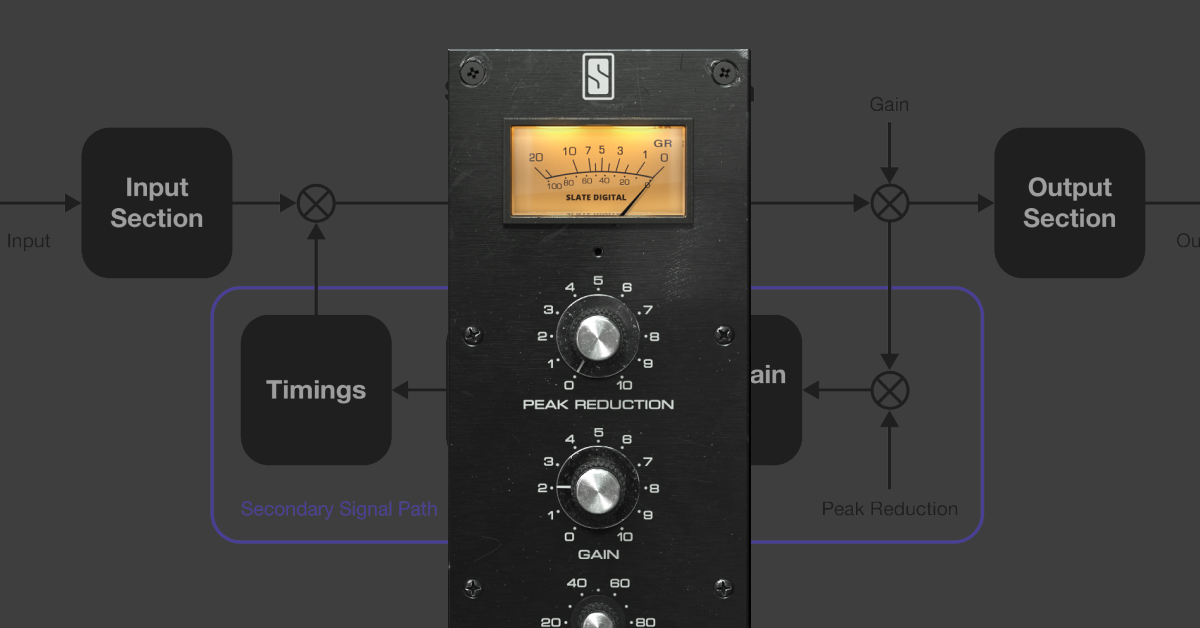
The SD-3A is a VMR module that recreates the Teletronix LA-3A leveling amplifier, a feedback optical compressor developed by Urei in the late 1960s.
We used the UA re-issue as a hardware reference.
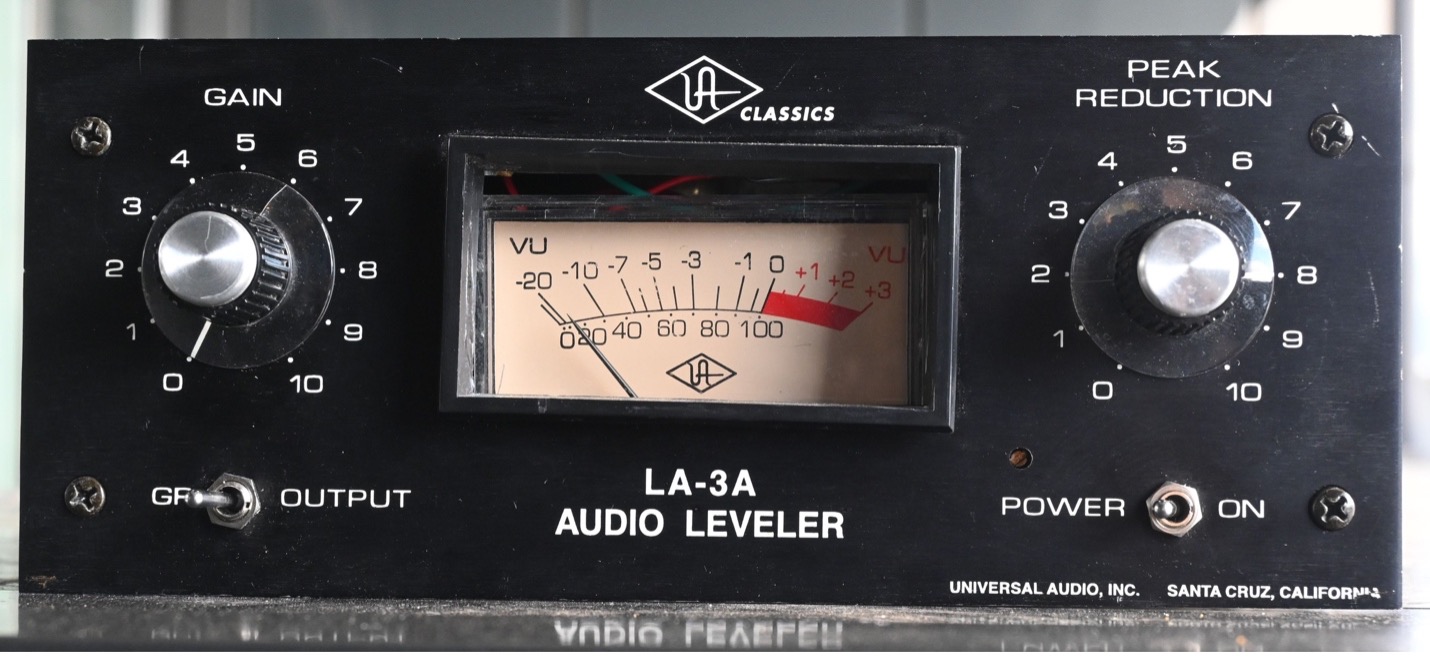
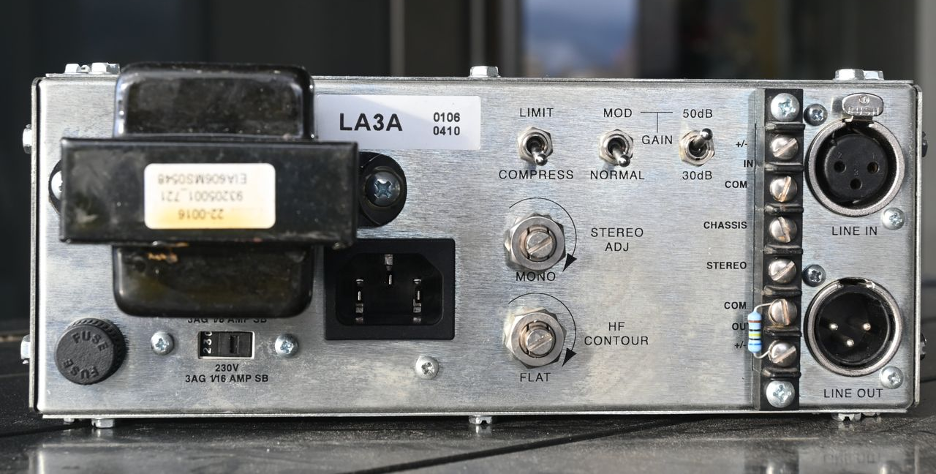
The LA-3A is simple to use with only 2 knobs: a peak reduction knob adjusting the amount of compression and one make up gain knob. There are two compression modes that can be selected on the back panel (limit and compress) as well as high frequency(hf) contour screw to adjust how the compressor responds to high frequency content.
Like its predecessor, the LA-2A, the LA-3A uses a T4 electro-optical cell to control gain reduction, offering a smooth and natural compression sound. While sharing components with the famous UA 1176 level amplifier developed a few years earlier, it’s the LA-3A’s use of solid-state amplifiers instead of tube based amps which contributes to its punchier and more transparent sound.
While the LA-2A is famous for its use on vocals, the LA-3A is reactive enough to be used on any type of audio content, including drums.
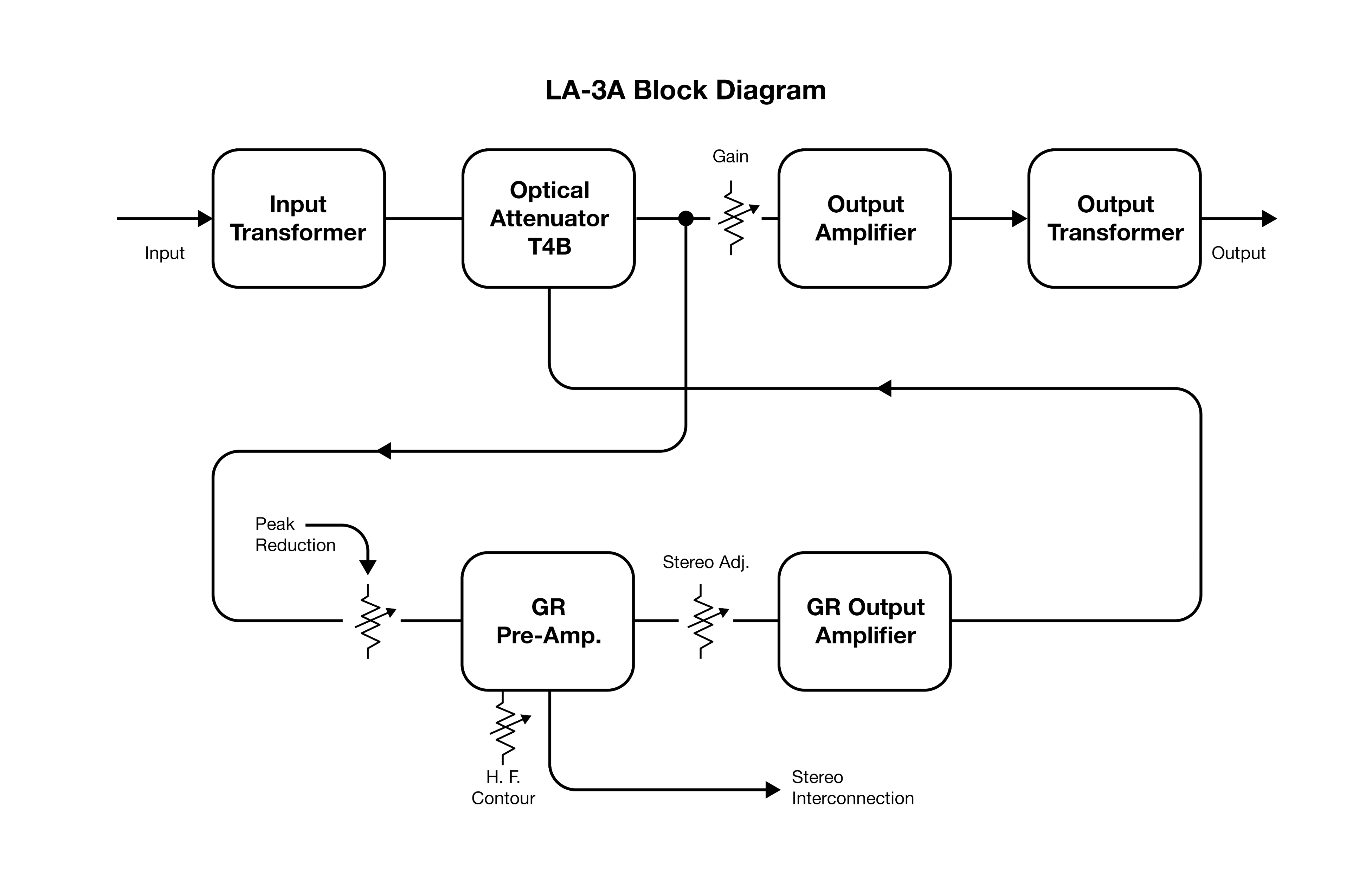
LA-3A Block Diagram (from the original instruction manual)
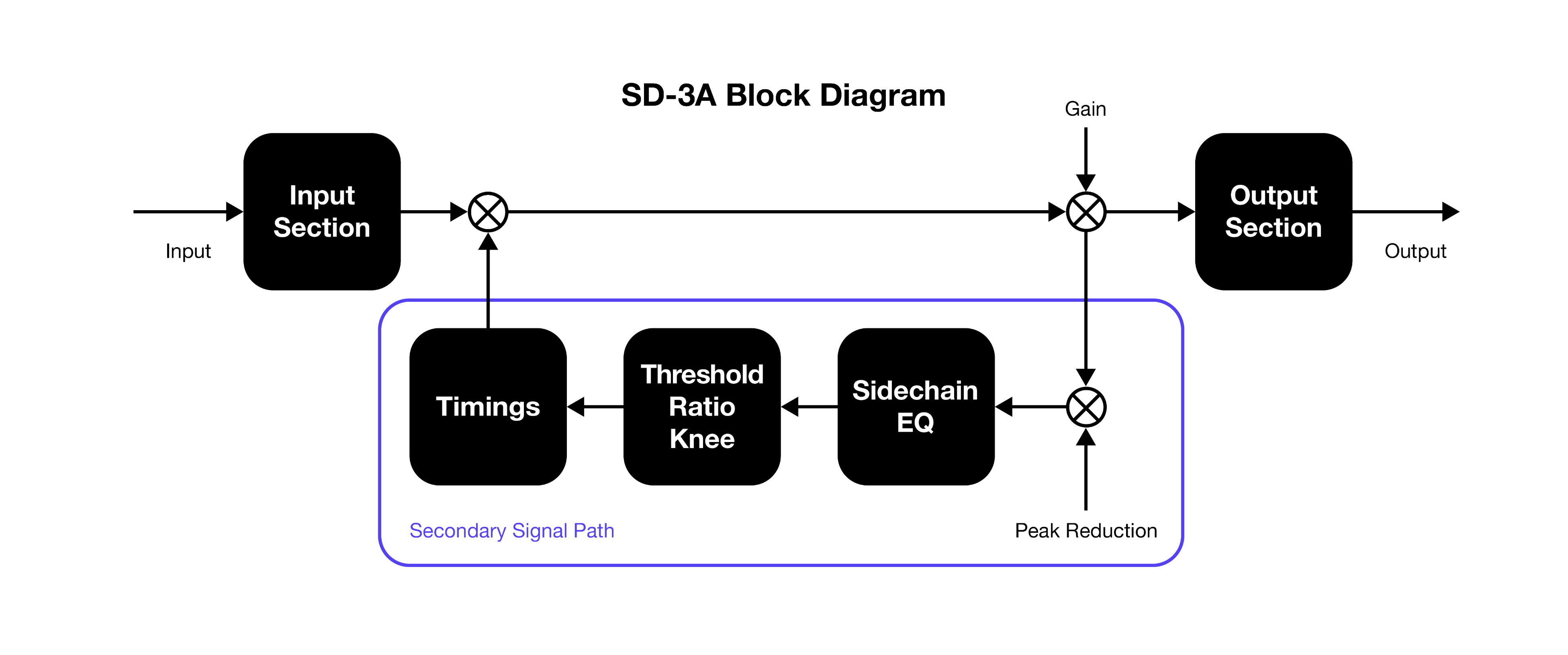
SD-3A block diagram
Although designed to be as transparent as possible in the audible range, the LA-3A is made of electrical components that are not perfect and have an influence on the sound. We can measure these imperfections by turning the Peak Reduction knob to its minimum value, ensuring that the compression does not disturb the pass-through measurement.
Transformers are used to transfer energy from one electrical circuit to another and step voltages up or down, match impedance, eliminate ground loops, and block DC signals. That’s why they are widely used in audio equipment.
We won’t dive into the complex world of transformer modeling here, but we can simply say that they consist of two long wires wrapped around a magnetic core. This magnetic component leads to a characteristic low frequency saturation as shown below.
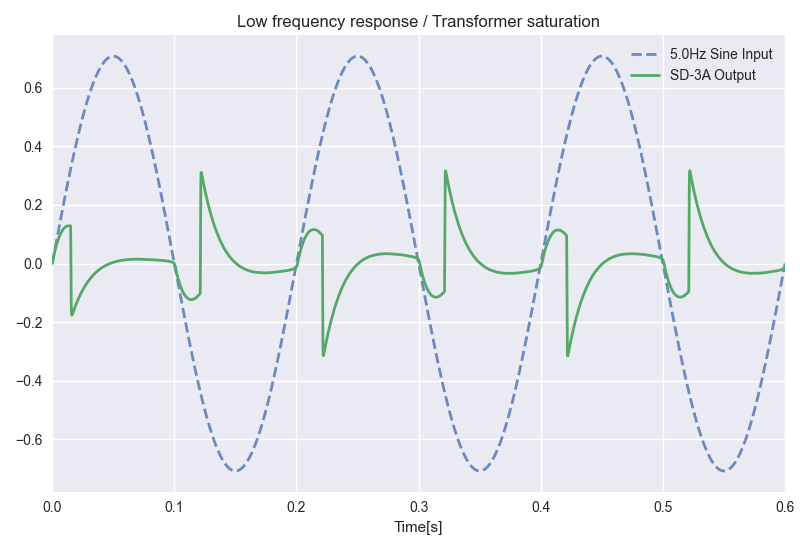
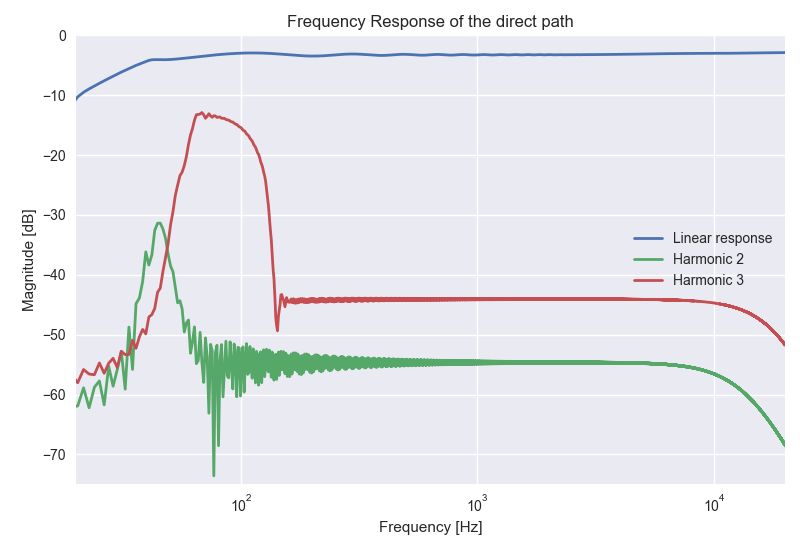
The subtle behavior of all the other analog components can be modeled using standard equalization and non-linear functions. The LA-3A has a clean, flat response with subtle harmonics. At low frequency we can see the effect of the transformer saturation.
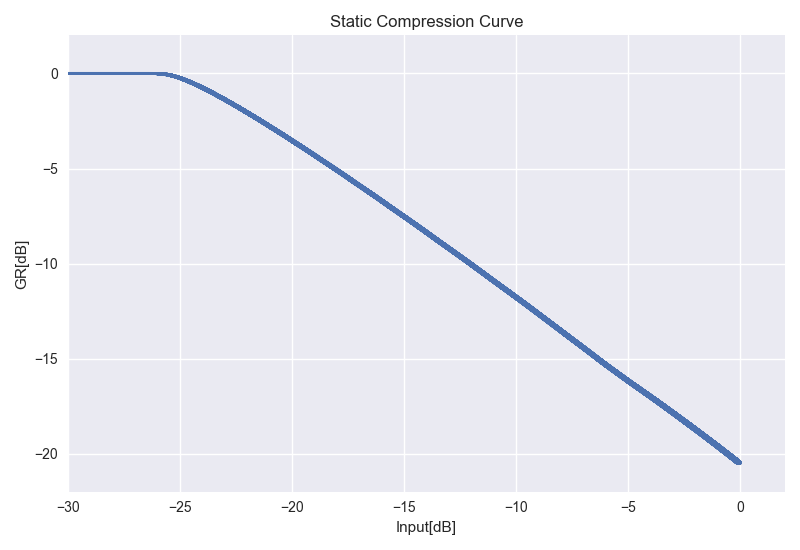
To model the optical attenuation of the original unit, we derive a secondary signal path. This part of the algorithm has the job to accurately compute the amount of compression to apply to the audio to obtain the compressed output. We call this signal Gain Reduction or GR.
As in, we use a feedback topology where the input to the secondary path is taken after the gain has been applied.
The LA-3A has a fixed-threshold, fixed-ratio, and soft-knee. The user can modify the gain of the signal entering the secondary path with the Peak Reduction knob to trigger more or less compression.
 Frequency dependence
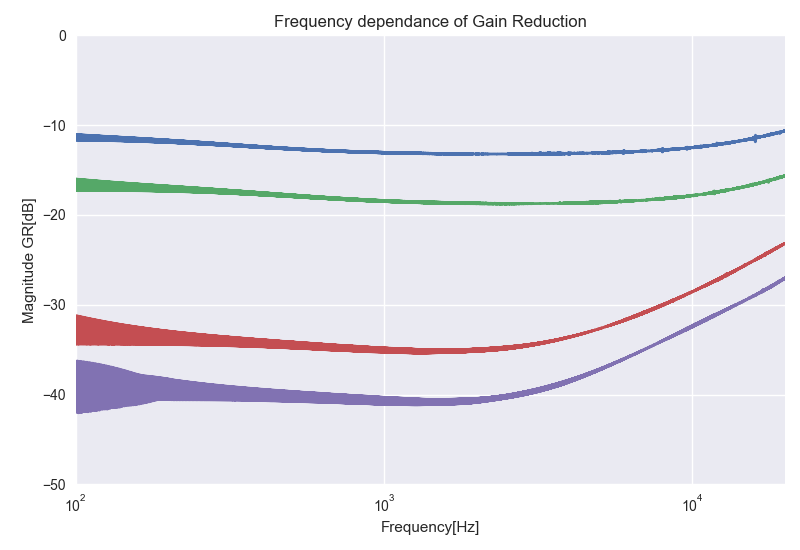
The amount of gain reduction of the LA-3A is frequency dependent.
Even with the HF Contour screw in the flat position: the hardware compresses the high frequencies less than the low frequencies in a level dependent manner and SD-3A will recreate this accurately.
Turning the HF Contour control lets you tune the amount of compression around 5kHz.
At the heart of the leveling amplifier is the electro-optical attenuator that consists of photo-conductive cells optically coupled to an electro-luminescent light source. The intensity of the light is proportional to the input audio voltage. This video by analogvibes is a good introduction to the inner workings of such cell: What the heck is a T4 cell? Teletronix LA2A – BYL-Series I, Part III – analogvibes
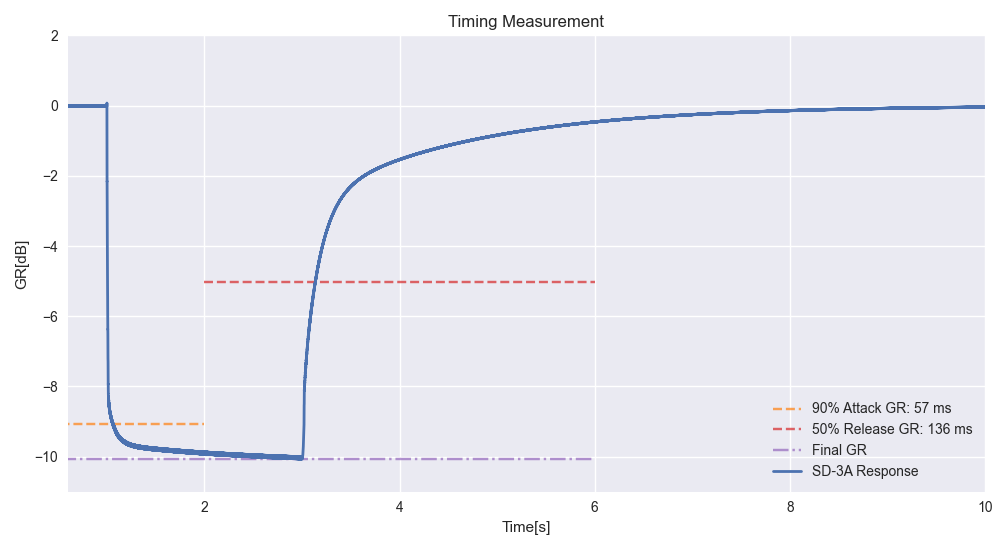
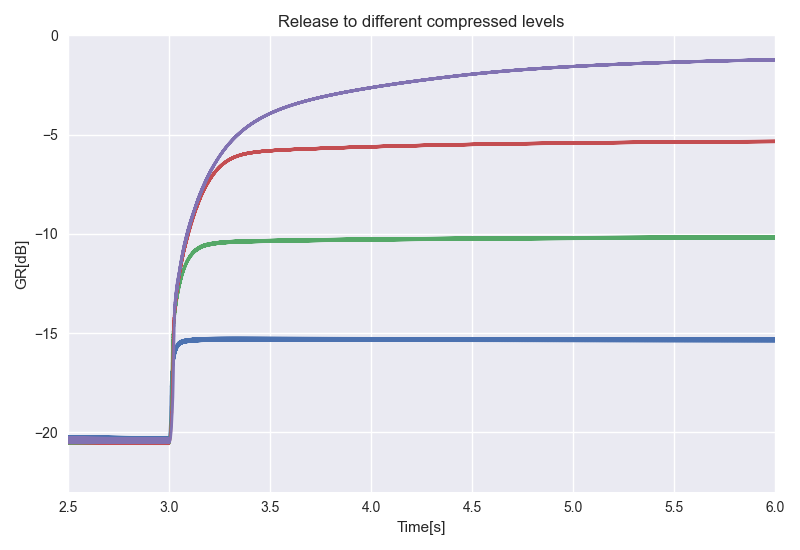
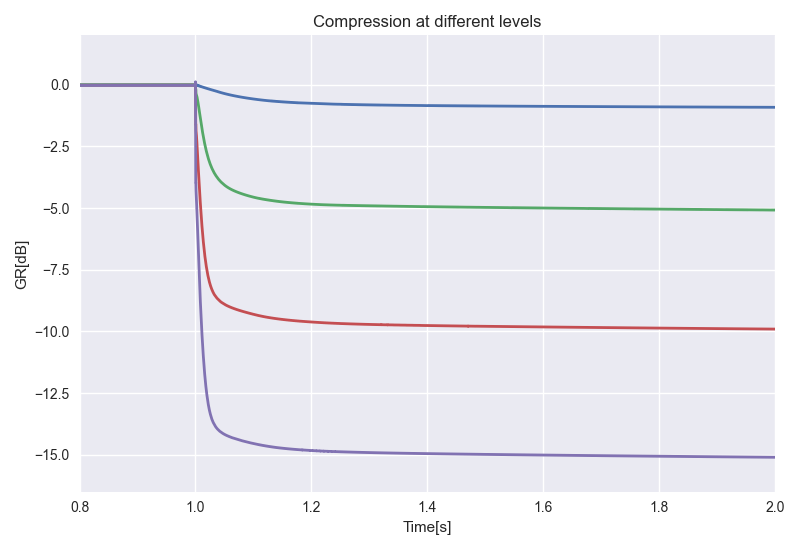
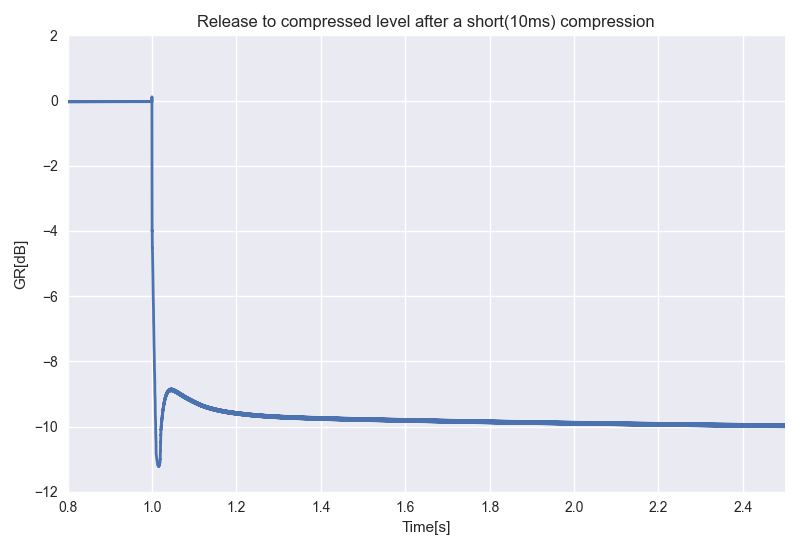
We carefully identified and modelled all the specific behaviors of the compression timings which are key in the character of the compressor. Since these timings depend on many factors, we measured them across a wide range of conditions to ensure accuracy.
1. Attack and release in compress mode PR=5

Now for the fun part, let’s dig into how it actually sounds. Make sure you’re listening with some monitors or headphones to get the full experience.
Here’s an example on a drum buss, with around 5 to 7 dB of Gain Reduction using the Limit mode to get that powerful drum sound:
Dry
With SD-3A
Here’s another example on an acoustic guitar, with the HF Contour engaged, compressing more the HF and allowing us to control the strong picking sound while maintaining the original tone:
Dry
With SD-3A
The SD-3A is the most accurate model of this classical piece of gear, making it a compressor that is easy to use and that works on everything, from vocals to drums. Try the new plugin and 140+ more in the Complete Access Bundle.
All product names and trademarks are the property of their respective owners, which are in no way associated or affiliated with Slate Digital. Product names are used solely for the purpose of identifying the specific products that were studied during our modeling process. Use of these names does not imply any co-operation or endorsement.
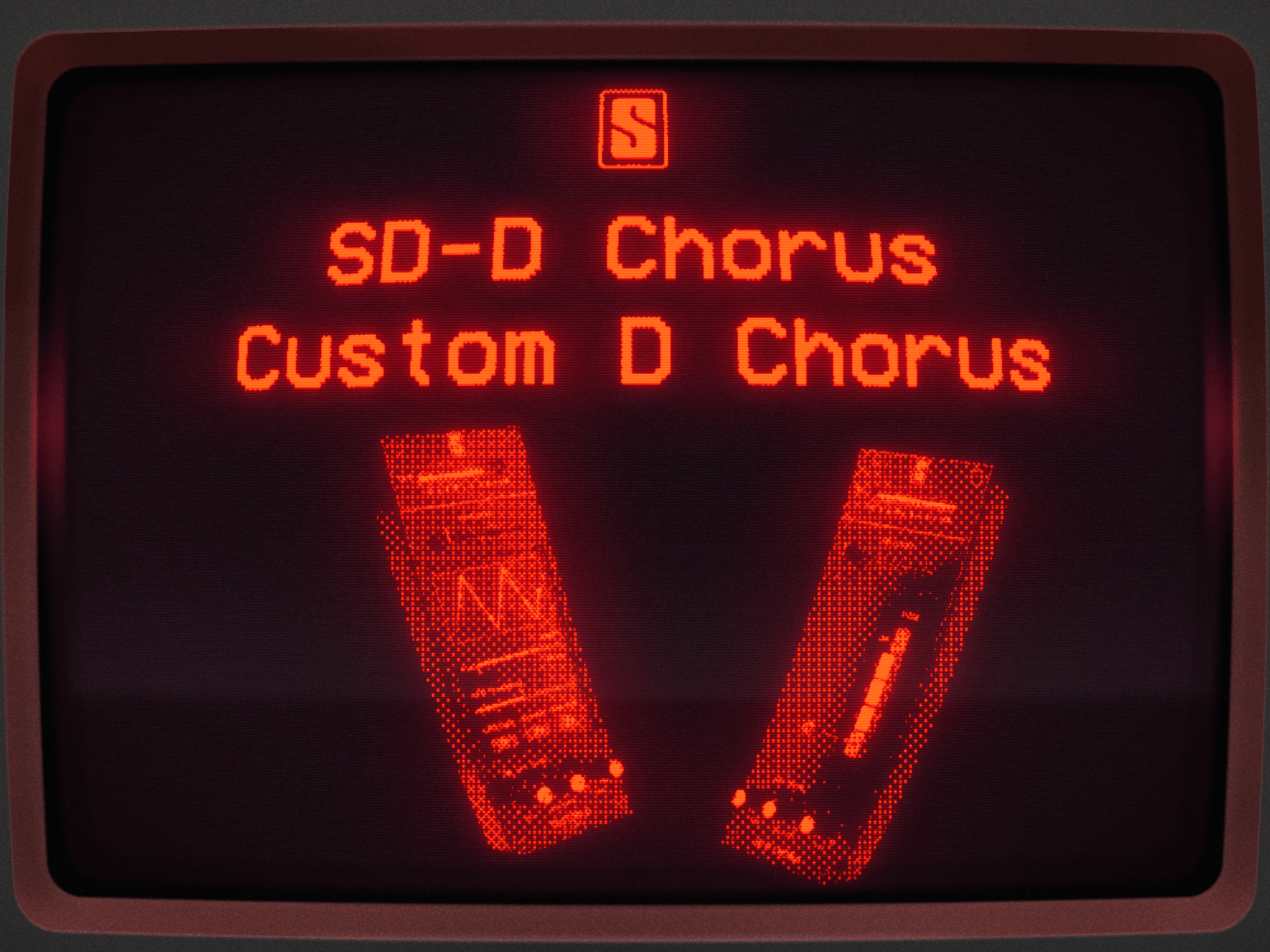

Virtual Mix Rack finally has a modulation effect!
We’re thrilled to reveal the new Chorus D Bundle for Virtual Mix Rack, featuring the new SD-D Chorus and Custom D Chorus modules. Based on a classic chorus introduced in the late 1970s, this iconic effect defined the sounds of Brian Eno, Kate Bush, and countless others.
Now, the Chorus D Bundle represents the first introduction of modulation effects to the VMR lineup.
 SD-D Chorus is a 1:1 recreation of a beloved chorus from the late 1970s. Featuring the four modes from the original hardware, users can also experiment with different combinations for more sonic possibilities. The intensity of the effect can be adjusted, too—something that wasn’t possible on the original hardware.
If you’re craving that coveted 80’s chorus effect, this is the module for you.
 Custom D Chorus takes the classic tone of the original hardware and gives users an unprecedented amount of control over their resulting signal. They can adjust the depth, delay, and rate of the LFO to their taste, set or bypass the cutoff frequency of their effected signal, adjust the shape of the LFO, or even randomize it for a totally unique result.
With Custom D Chorus, you can morph one of the most famous effects of all time to suit your exact needs.
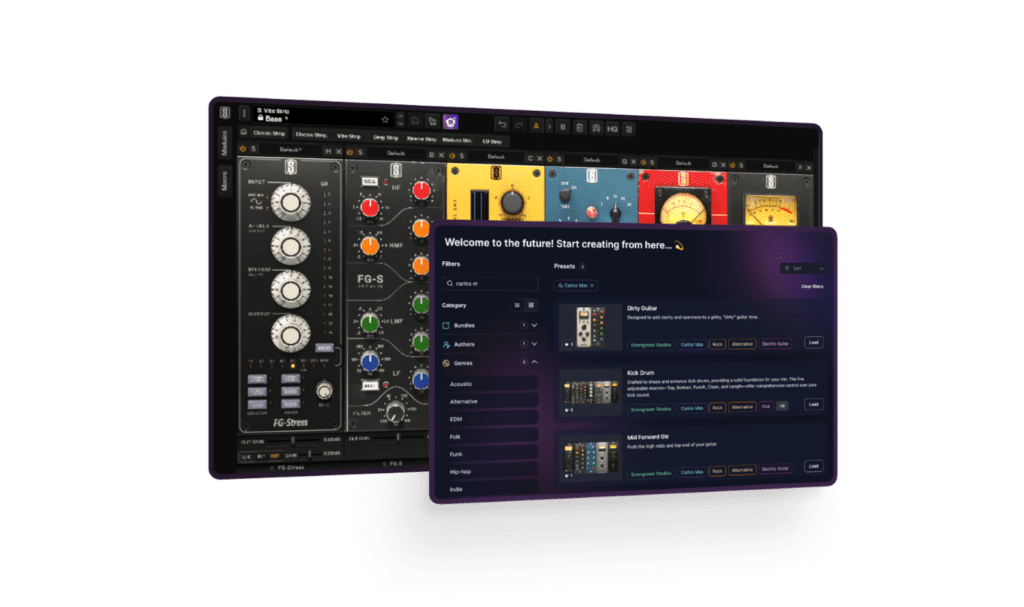
Virtual Mix Rack (or ‘VMR’) is Slate Digital’s flagship mixing plugin that packs over 40 analog modules into a single intuitive digital workspace. Late last year, the company released Version 3.0, an update that introduced a new macro system, a comprehensive preset browser, external sidechain, individual module gain staging, and interface scaling that provides users with an optimized viewing experience. With the Chorus D Bundle, VMR gains yet another level of utility.
Current All Access Pass and Complete Access Bundle subscribers can access the Chorus D Bundle modules now! Update Virtual Mix Rack and try them out today.
Check out the plugin teaser below:


Some people are born to be in the studio. One of those people is Thomas Warren.
Unlike those in the music world who come from a family of musicians (professional or otherwise), Thomas naturally found his way into the business. From learning foundational production principles by rebuilding beats to interning at major studios, Thomas found a way to turn his passion into a career, leading to a discography that features names like Rihanna, Kendrick Lamar, Sam Smith, Dominic Fike, and Prodigy of Mobb Deep, just to name a few.
Thomas recently took some time to sit down and talk with us about his career beginnings, his favorite part of the production process, and some key things engineers should know to set themselves up for a successful future in the industry.
Drew Van Buskirk: Thanks for sitting down with us, Thomas. For those who might not be familiar with you, could you give us a quick introduction?
Thomas Warren: Yeah, of course. I’m Thomas Warren, a mixing and recording engineer based in Los Angeles. I’ve been doing this professionally since around 2012. I got my start by attending the Conservatory of Recording Arts and Sciences, then did internships at places like Quad Studios and Premier in New York before moving to LA.
Once I got to LA, I spent several years working at Westlake Studios and with Stargate before transitioning into full-time mixing. Over the years, I’ve been fortunate to work on a range of projects spanning hip-hop, R&B, and pop, collaborating with some of the biggest names in the industry.
DVB: Did you grow up in a musical household? Were you ever in bands, or were you always drawn to production?
TW: I didn’t really have family in music. Some of my uncles in England were into metal, but I was never in that world. I was more into production and hip-hop. I played piano growing up and did some production work before getting deeper into engineering. I remember being fascinated by the way beats and melodies came together, and that naturally led me into studio work. I was always trying to reverse-engineer my favorite tracks to understand how they were put together.
DVB: What was your ‘light bulb’ moment when you knew you had to work in a studio?
TW: I’ve always been drawn to music — I’d fall asleep listening to it, constantly messing with sound. But the real moment came when my mom had a friend whose husband was an engineer. He’d worked with Bone Thugs, Korn, and other artists. I visited his studio in high school and just thought, “How do I do this?” One of the guys there told me about the Conservatory. The second I walked into that school and saw the plaques on the walls, I knew. That was it. It was a moment of absolute clarity—this was where I needed to be.
DVB: What was your first big project, or at least the first one you handled on your own?
TW: That would be working with Prodigy from Mobb Deep at Quad Studios. It was my first real solo engineering session. I was originally scheduled as the second engineer, but the lead engineer didn’t show up, so I had to step in.
I was nervous — I grew up listening to that kind of hip-hop — but Prodigy was super cool, even teaching me things along the way. He was patient and really helped me build confidence in the moment. Looking back, that was one of those defining moments where you realize you’re truly in the game.
DVB: That’s wild. Sounds like one of those classic music industry moments where you either step up or miss out.
TW: Exactly. It happened again when I worked on Dominic Fike’s “Mona Lisa” for the Spider-Man soundtrack. I was with Stargate at the time, and they knew I wanted to mix more. They just said, “Hey, can you throw a mix on this? We need it right away.” I dropped everything, mixed it in three hours, sent it off, and it was approved. You just never know when those opportunities will come. That’s why it’s so important to always be ready.
DVB: Is that kind of last-minute chaos common in this industry?
TW: All the time. Just the other day, an artist booked me for a session the next night, and I had three other projects I needed to finish beforehand. It can be overwhelming, but it keeps things exciting. No two days are ever the same. The unpredictability is what makes it thrilling: you’re always on your toes, adapting, problem-solving, and pushing your creative limits.
DVB: What was the first huge project that really put you on the map?
TW: That would be ANTI with Rihanna. I spent two years on that project, starting at Westlake, then moving to a big mansion in Malibu to finish it. I worked closely with Kuk Harrell on vocal production and learned a ton from her engineer, Marcos. We probably went through two or three albums’ worth of material before settling on the final version. It was intense — 17, 18-hour days — but such a valuable experience. Seeing how Rihanna worked, how meticulous she was with every element, was inspiring. It taught me how much precision and effort go into crafting a truly great album.
DVB: That’s incredible. Any other major sessions that stand out?
TW: Working with Kendrick Lamar on Mr. Morale & The Big Steppers was amazing. He booked out Stargate’s studio while they were on break, and we had all the rooms going at once with top producers. Kendrick is one of the easiest artists to work with: super focused, great energy. He has a clear vision and an intense work ethic, which makes the whole process smoother. The way he approaches storytelling through sound is on another level.
DVB: What’s the biggest lesson you’ve learned in your career?
TW: The biggest thing is that skill gets you in the room, but your personality and ability to adapt keep you there. You need to be able to work with all kinds of people, handle different personalities, and know when to step up or step back. The technical side is always evolving, but relationships are what sustain a long career. It’s not just about being a great mixer, it’s about being someone that people want to work with again and again.
DVB: Is there a specific part of the process you love the most?
TW: Mixing. I love being the last person to touch a song before it goes to mastering. It’s where I can really bring everything together and add that final touch. The details matter, and I love refining every element until the track sounds exactly how it should.
DVB: Ok, let’s talk Slate Digital. I’d love to know how our plugins fit into your workflow.
TW: I use Slate Digital every day. The SSL plugins are in my mixing template, and I love the Virtual Mix Rack. Fresh Air is amazing, and the FG-DS 902 is a hidden gem for high-end smoothing. I also use VerbSuite all the time for reverb, it’s really versatile. It’s a key part of shaping the depth and space in my mixes.
DVB: Sounds like you’re super familiar with our lineup! Any underrated plugins you’ve found cool uses for?
TW: The Monster compressor is awesome for parallel processing, especially on drums and ad-libs. And I just started messing with the FG-401 compressor, I really like its transformer option. It adds a nice warmth and character.
DVB: Taking notes for my own future use (laughs). Before I let you go, any parting words of wisdom for young engineers just starting out?
TW: Stick with it. This industry takes time. I graduated in 2011 and only started full-time mixing two years ago. A lot of people don’t make it because they expect instant success. If you’re committed and willing to hustle, you’ll find your way.
Kaleb D. Allen is a Grammy-nominated recording engineer who has a hand in some of the most culturally impactful records of the past decade. A Musicians Institute graduate and certified Pro Tools expert, Kaleb currently serves as engineer for producer and songwriter John Shanks.
Kaleb’s discography is littered with legendary names, including Sting, Shaggy, Hozier, Adam Lambert, Dolly Parton, and many more. In 2023, Kaleb received a Grammy nomination for Best Reggae Album of the Year for his contributions to the collaborative album Com Fly Wid Mi by Sting and Shaggy.
Despite his very busy schedule, Kaleb recently took some time to sit down with us to talk about his early beginnings, his best advice for up-and-coming engineers, and some of his core recording principles.
Alright, first things first. Tell us who you are, what you’re all about, what you do, etc.
I’m Kaleb Allen, and I’m predominantly a recording engineer. I started out as a drummer in local bands, and since I was usually the one handling our recordings, I naturally got into engineering. Over time, I connected with other musicians and pursued session drumming, taking any opportunity, big or small, to be part of the creative process. One of my first gigs was at Echobar Studios, run by Eric Rikers. As soon as I stepped into a fully-equipped commercial studio, I thought to myself, “This is way cooler than playing drums.”
That moment led me to Musicians Institute, where I took an accelerated audio engineering program that gave me a solid foundation. A few years later, I fully committed to the craft—getting into studios, mastering Pro Tools, learning proper session etiquette, and pushing myself to make recordings that measured up to the records I admired.
How did you finally get your foot in the studio door as an engineer?
My first studio experiences were unpaid internships—literally mopping floors for free—but I was hungry to learn. Chris Montgomery at Tangent Recording and Louis at 17th St. in Orange County gave me my first opportunities.
My first real studio job came at NightBird Studios in West Hollywood. I applied as an intern, but the studio manager, Mike, needed assistant engineers immediately. I had no experience, but he took a chance on me, and I got paid to learn on the job.
That role threw me into a steep learning curve—grasping studio operations, mic selection, and most critically, signal flow. I quickly realized how little I knew until I had to perform under pressure.
That’s a fascinating journey.
I had an unconventional path in this industry, for sure. I worked at two studios simultaneously—NightBird and United Recording. It was a huge conflict of interest in retrospect, but both teams were supportive and let me make it work. I’d spend the first half of my day as a runner at United, then head over to NightBird from 4:30 PM to 1:00 AM. I’d get up at 5 or 6 AM and do it all over again, day after day, for nearly two years.
I wouldn’t change a thing about that experience. It fueled my passion for this industry and provided an incredible education—one I was fortunate to get paid for. It allowed me to support my daughter while pursuing my dream. I was a late bloomer in this field, not truly committing to it until just after my 30th birthday, but once I did, my trajectory was fast.
It also confirms my theory that a lot of drummers end up doing studio work. It makes sense that would be a relatively natural transition.
Absolutely. Many of the engineers I admire started out the same way. Growing up, I was obsessed with how drums sounded on records. Then, once I got into recording, I realized I had no idea how they actually achieved those sounds. I was obsessed.
That curiosity and drive is what fuels the journey. It’s essential.
Definitely. That’s what got me through those years—momentum from people taking a chance on me, and my own passion for learning and improving. In the early days, being a runner can be demoralizing. Some days, you just want it to be over, and you question if you’re making the right choices. But then, the next morning, you can’t wait to do it again. That’s when you know you’re in the right place.
What was the first big session that you were in charge of?
The first big session I was in charge of was at NightBird Studios. I saw on the schedule that Sting was coming in, and I thought, “Oh, I’d love to be a part of that.” I ended up engineering that session, and we hit it off right away. It was an amazing experience. Those sessions kept happening, and they kept asking me back, which was incredible.
That first session at NightBird was when I realized, “Oh, I might actually be good enough at this to earn the confidence of people who have made some of the records that shaped how I listen to music.”
That’s amazing. Are you still working with Sting today?
Yeah! We actually just did a session at EastWest not too long ago.
I listened to The Police obsessively growing up—not just because of Stewart Copeland’s creative drumming, but sonically, everything about those records was formative for me. Same with Sting’s solo career. So to be invited into that world, when I had so little confidence at the time, and then to have them say, “Yeah, that was great, thank you….”

That had to have been so surreal.
Big time.
And thankfully the whole “don’t meet your heroes” thing didn’t prove true.
Absolutely. In my experience, the truly successful people—the ones with long, legendary careers—are usually the most chill. They’ve already done it all, and they’re often focused on other things. There’s no need for a big display about who they are or who they think you should think they are. Not to say there’s zero ego — I’ve had some nightmare experiences. But most of them weren’t with the legends. They’re largely decent people.
I imagine there’s more to gaining their respect than just technical ability; it’s also about understanding studio etiquette.
Oh, definitely. That’s key.
For people just getting into the business, what are some basic studio etiquette tips that would help them early on?
The biggest lesson I learned, through hard-won experience, is to keep your knowledge to yourself at first. A lot of runners and assistant engineers are eager to show how much they know, which comes from enthusiasm and wanting validation. I get it. But that’s not always appropriate.
Part of studio etiquette is understanding that you’re there to serve the process. If someone wants to know what you can do, they’ll ask.
That makes perfect sense.
Trying to shoehorn yourself into situations rarely works. The best opportunities happen organically, not because you’re pushing to prove yourself. If you try too hard to insert yourself, it can create an unbalanced dynamic with whoever you’re trying to impress.
It’s much better to let your work speak for itself. If people see you as someone who listens, who provides a service, and who contributes positively to the environment, you’re already in.
And if you’re doing great work, people will notice — you shouldn’t have to say it out loud.
Yes, 100%.
What was the first time you really noticed how mic placement or studio conditions made a major difference in the recording?
Oh man, that’s a great question. It happened while working at United Recording. That studio—formerly Ocean Way—has an incredible legacy. Some of my favorite records were made in that building, with that gear, in those rooms, using those microphones.
Coming up as a drummer, I was always trying to figure out how people got these incredible drum sounds. One day, we had an expertly mic’d drum session at United. The kit was in a good spot in the room, the mics were placed well, everything was in phase, and the players were great. I pushed the faders up in the control room, and suddenly, there it was. I realized that so much of the sound I had been chasing came from the recording environment itself.
How do you approach or assess different rooms for… like, how do they affect mic placement? How do you assess that from the get-go?
It all depends on the source. With loud instruments or amps, I have to consider the room, mic choice, placement, and polar pattern. Many assume any cardioid mic will work and that bleed is always bad, but that’s not true. Al Schmitt’s *On the Record* highlights how bleed can be beneficial if managed properly.
Loud sources also create strong reflections, which can be useful or problematic. High ceilings help avoid harsh reflections, unlike a low seven-foot ceiling that bounces sound back too quickly. Every variable—room, source, and mic choice—shapes my approach.
Mic placement always comes first, even before EQ. If I’m miking an acoustic guitar, I’ll move the mic while listening in headphones to shape the sound. Need more high-end? Adjust the mic. Need a different tone? Swap it out. Not every studio is going to have your dream mic waiting for you, so adaptability is key.
Right.
That touches on things like the ML-1A and the ability to really get those flavors out of all the different microphones. These days, the options are virtually endless. I’d advise anyone trying to get into this to go through different microphones. If you have the ML-1A, try different microphones before you touch an EQ.
The function of EQ is to change phase relationships within all the harmonic and fundamental frequencies of a given source. If you’re notching stuff all over the place, you’re going to end up with something that doesn’t sound like the instrument you’re recording. And then when you listen to it in context or solo it, you’ll wonder why it doesn’t sound the way you want it to. It’s because you’ve butchered the characteristics of what makes that instrument sound like itself. If you can get the tone and color you want with just the microphone and mic placement, it’s unbelievable how well things fall together in the mix later.
Do you have any hard and fast studio rules that you find apply no matter what room you’re in or who/what you’re working with?
The most important thing is ensuring the artist has full control over their headphone mix. Whether through Pro Tools or a console, they need a great mix to feel inspired and deliver their best performance. I can’t fix a bad take after the fact—performance comes first. When the artist hears exactly what they need, I just hit record, and the magic happens. In every great session I’ve had, the common thread was a stellar headphone mix. When that’s right, the rough mix at the end of the day already sounds incredible.
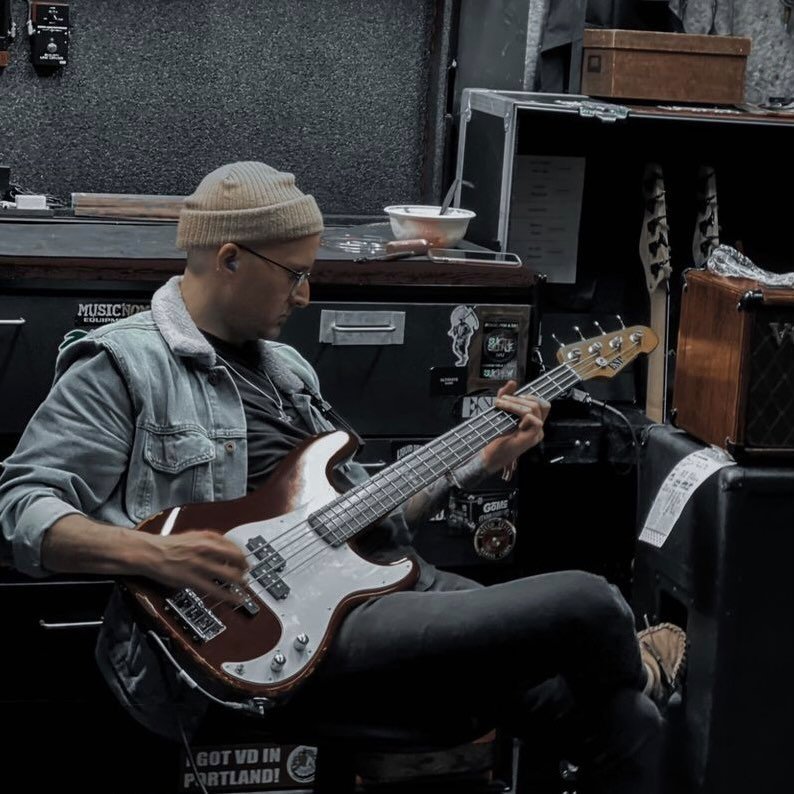
Are there any unique things you’ve discovered in the studio involving mic placement scenarios where you got a result you didn’t expect?
This ties back to understanding mic polar patterns. Many engineers default to cardioid for a direct, in-your-face sound, especially on vocals. But that often introduces proximity effect issues—too much low-mid buildup, leading them to notch out 200 Hz or have the artist back up. The problem? As soon as the vocalist moves away, you get more room sound, and the recording loses its tight, focused quality.
A better solution is switching the mic to Omni or Figure 8 in a dead room. This naturally reduces the proximity effect without relying on EQ, preserving clarity while still maintaining a sense of directionality. I first noticed this trick by experimenting, then later confirmed it through some great research. Omni mode, in particular, works wonders for eliminating low-mid muddiness while keeping the vocal presence intact.
The less EQ I need after the fact, the better the recording will sound. Getting it right at the source always wins over fixing it later.
How big a role does experimentation play in your day-to-day workflow?
That’s a good question. I’d say only about 20-25% of the time. More often than not, when I’m with the artist and producer, it’s pretty much go time. They have the things they want in my workflow.
When it comes to the mixing side, that’s where experimentation really shines. When it’s just me in the room and I’m twisting knobs, that’s when it’s time to experiment. I can be subtle and sneaky about being experimental during tracking, but if I’m being truthful, it’s not all that often. It can be difficult to jump out on a limb while people are being creative and want to track right away, especially when they have a tight schedule. That can be tricky.
Experimentation must be much more important in the learning phase, right?
Yep, absolutely. Taking time for yourself before or after the artist is in the room to experiment is a good idea. I’d suggest doing it after the session. I’ve tried experimenting before a session, and then I forget what I did when the session starts. That ends up being a roadblock later.
Gotcha.
So my more specific suggestion would be to record some good material during the day and then experiment with it afterward. That’ll help inform the next session, whether it’s with that artist or not. Even if I’m tired or have ear fatigue after the session, it’s a really good time to take inventory of what you’ve done and try changing up a few things. It’s a good fail-safe to wait until after the session to get experimental.
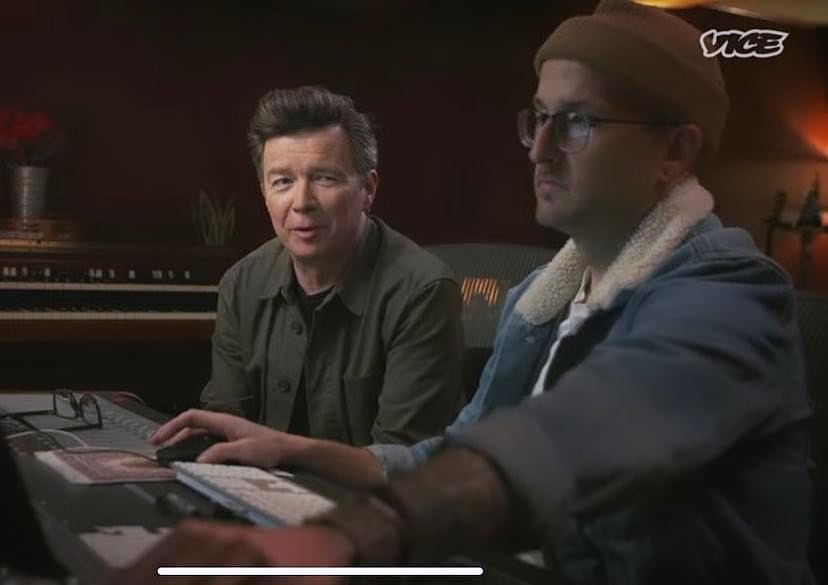
Do you ever switch microphones mid-session to capture a specific vocal effect, or do you typically stick with one mic and adjust its placement to achieve the desired sound?
I’d say the latter; that’s always going to result in a drastically different sound. Even a slight movement, especially if the mic is in cardioid, will have a discernible difference on tonality. Dave Pensado talks about using different microphones for lead vocals versus background vocals for the same vocalist, and that works well.
What are some common pitfalls that both new and experienced engineers can avoid to help enhance their workflow in the studio?
Oh, that’s a good one. I’d say always take the time to ensure everything works—especially the gear you’ll be using. Check inputs, Pro Tools settings, DSP modes, and hardware inserts before the session starts.
If you’re in a new studio, don’t wait until the artist arrives to troubleshoot. I’ve seen too many engineers skip prep because they’re not getting paid for setup time. But being prepared leads to smoother sessions, better results, and more callbacks from artists and studios.
If you’re focused on squeezing every billable second or just feeling lazy, take a step back. The worst time to discover a broken mic capsule is when the artist is already in the booth. Preparation prevents those disasters, so do the work upfront.
Being early is being on time.
Absolutely.
If you’re working entirely in the box or find yourself in a studio setup that’s lacking some essential tools, are there any plugins that you consider especially beneficial?
The Virtual Mix Rack has been a game-changer for me. I use it in every session, even for rough mixes. That and Virtual Tape Machine are my go-to plugins. I don’t have a tape machine, but the Virtual Tape Machine gives me that warm, vintage 2-track vibe I love, especially with the half-inch setting. It adds the perfect low end without needing the real thing.
In-the-box tools have come a long way. It’s not 2006 anymore, where you’d spend $700 on a plugin and hope it works. These days, the quality is solid, and having access to top-tier plugins in both commercial studios and my home setup is a luxury. I can take all my mixes and plugins with me wherever I go.
For the purists out there: I get it, I was one too. But these tools sound incredible and work on everything. The saturation from the Virtual Mix Rack and Revival, combined with the Virtual Tape Machine, gives me the warmth and vibe I need, without the hassle of preamps or renting a tape machine. It’s all super convenient.
How do you avoid getting stuck in a cycle of overthinking and over-the-top processing chains?
For me, avoiding over-processing and option paralysis usually happens after I’ve already gone too far. I’ll listen back, bypass some plugins, and realize, “Oh, it sounds better without the 900 things I just added.” Luckily, I’ve gotten quicker at recognizing it now, but it’s part of the process.
The great thing about working with plugins is that you can always go back and undo things. You don’t have to commit until the final mix is sent off to mastering. It’s OK to realize after the fact that you overdid it. As long as your mic placement is solid from the start and you’re not wrecking the sound with excessive EQ or processing, you’re still in a good place.
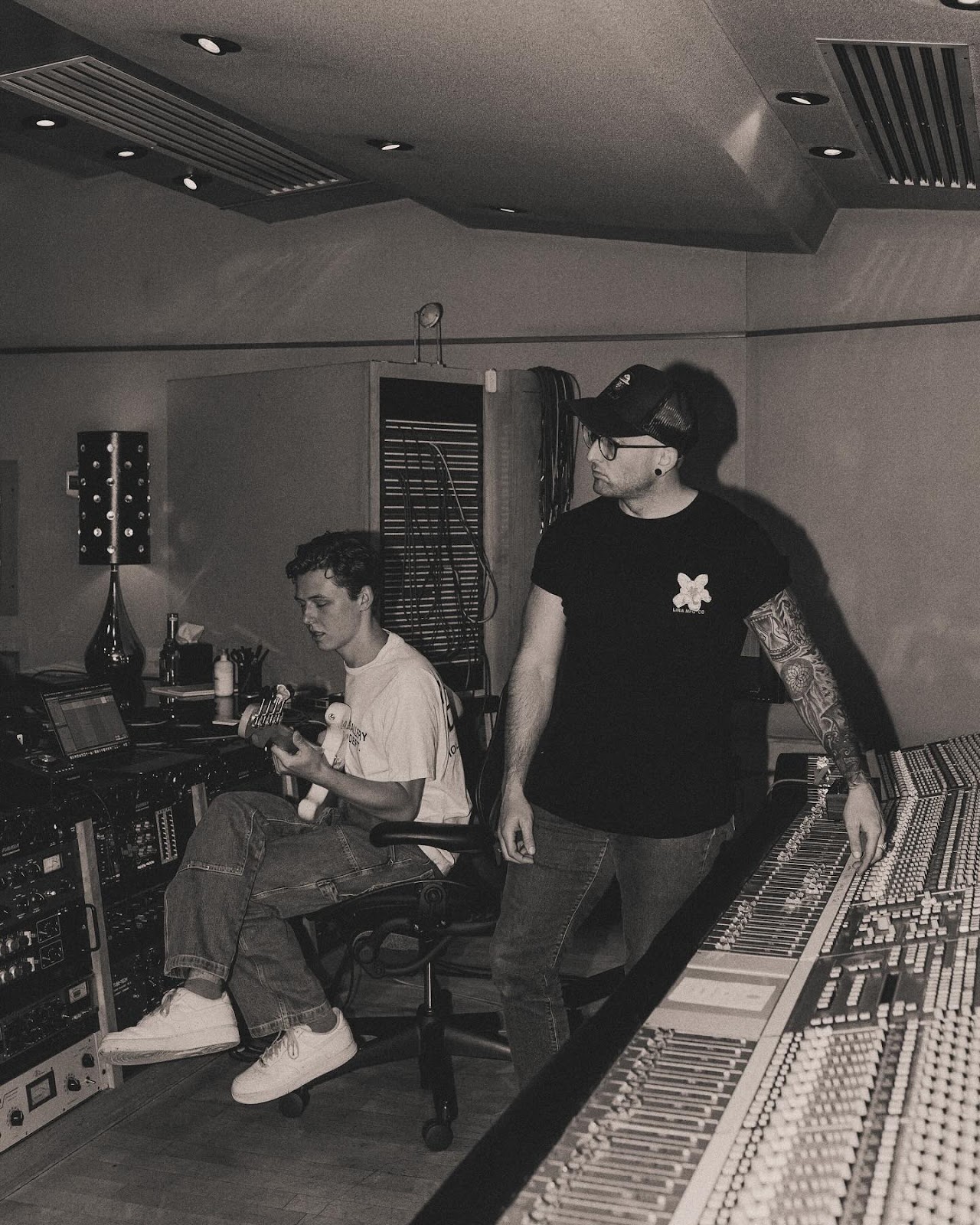
Before I let you go, do you have any parting words of wisdom for people who are just entering the recording world?
If you can swing it, and if you have the time, go out and buy the book The Recording Studio Handbook by John M Warham. I would recommend any edition. I have one from 1976, I believe.
The information in there, written and logged by an actual, not just a recording engineer, but an actual electrical engineer who is a recording engineer and borderline acoustician, the information he has in there is incredible. This book helped me tremendously and helped me get to a place intellectually that opened doors for even more opportunities.
Don’t think that old information doesn’t apply because we’re in a more of a digital age. It absolutely does.
That’s excellent advice. Ok, final question: Is there anything you have coming up that you can preview for us?
All I’ll say is I’m working on some very exciting stuff from multiple angles, for multiple artists and producers. I’ve been incredibly fortunate to be a part of some amazing projects, and I’m really grateful for the opportunities I’ve had. This is such an exciting time in my life and career, and it just keeps getting better.
As long as I stay focused, have the right tools, and make sure they’re working properly, everything should keep going incredibly well.


Featuring a totally redesigned user workflow and a whopping 12 new sample packs, the new Slate Sounds platform makes finding the perfect sound a breeze.
Slate Sounds makes it super easy to find exactly what you need. Search by genre, instrument type, key signature, or BPM, and audition loops and one-shots individually. When you find the right sound for your project, download it by itself or grab the whole pack — it’s your call.

With over 4,000 new sounds (more than 20 GB!) joining the party, Slate Sounds is packed with mouth-watering, one-of-a-kind samples that will take any track to the next level.
New packs include:
Subscribers can access Slate Sounds now! Click here to try start exploring today.


When we first released the original ML-1 microphone and Virtual Microphone System (VMS), the recording world buzzed with excitement. Glowing reviews and countless YouTube demos proved it was a transformative step forward, bringing the coveted sound of classic microphones to anyone with a DAW.
Now, we’re raising the bar again with a new microphone and an entirely fresh way to use your mic models: meet the ML-1A microphone and the Virtual Microphone System plugin.
Let’s explore how the ML-1A distinguishes itself from the original ML-1, how it seamlessly integrates with our plugins and mic model lineup, and why it’s a must-have mic—even if you already own the first-generation model.
When the ML-1 first hit the scene, it revolutionized recording by making iconic microphones accessible to the masses. It provided a neutral, “clean slate” signal that could be transformed into the sound of timeless vintage mics spanning multiple musical eras. It was a game-changer, letting creators achieve world-class vocal and instrument recordings without spending a fortune on famous gear.
But even groundbreaking ideas can be improved. The first-generation VMS required you to run your models in Virtual Mix Rack (VMR), which could be a heavy lift on some systems and wasn’t the most intuitive user experience. And while the ML-1 hardware was revolutionary, our engineers saw room to enhance its build quality, refine the low-frequency response, and add hardware controls for loud sources.
The ML-1A builds on the strengths of its predecessor while introducing several important upgrades.
We redesigned the ML-1A from the ground up to create a mic that offers an even more accurate “blank canvas” capture. That means:
Got a vocalist who practically lives at 100 dB? Recording a drum kit in a tight space? The ML-1A now includes a three-position pad switch with -10dB or -20dB options, handling sound pressure levels up to 145 dB SPL. No more worries about headroom or distortion on loud takes.
For the tech-savvy (and the curious), here are the ML-1A’s key specs:
Translated into everyday terms, the ML-1A captures everything—from the subtlest whisper to the loudest snare—without losing clarity or detail.
Beyond specs, there’s the look and feel. The ML-1A comes in a durable, ballistic nylon soft case, replacing the old flight-case form factor. It’s easier to carry around, looks sleeker in your studio, and still provides reliable protection for your new go-to mic.
When you combine these benefits with the ML-1A’s improved performance, it’s clear why the jump from ML-1 to ML-1A isn’t just incremental—it’s transformative.
Of course, the ML-1A’s hardware is only half the story. The brand-new, dedicated Virtual Microphone System plugin gives you an arsenal of new and improved features that make your projects easier, faster, and more creative.
Ever wondered what a silky-smooth, old-school tube mic blended with a modern bright condenser would sound like? Now you can morph them together. The new plugin lets you pick two different mic models and blend their characteristics—resulting in a custom hybrid you won’t find anywhere else.
Transform a standard mono vocal into a wide, immersive track that spreads across the stereo field. Perfect for background harmonies or creating an epic cinematic vibe for dialogue, this feature adds depth and interest without a complicated signal chain.
We all know the proximity effect can be your best friend—or your worst enemy. The VMS plugin’s ‘Proximity’ Slider simulates how close or far your vocalist is from the mic, controlling that extra bass buildup that happens in real life. Need some extra warmth? Push it up. Getting too boomy? Dial it back. There’s also a handy low-frequency roll-off to instantly remove rumble or unwanted low-end clutter.
Pair your mic model with preamp emulations to recreate legendary front-end chains. Whether you crave the subtle saturation of a tube console or the punchy clarity of a modern solid-state design, it’s all there in one interface.
One of the most exciting aspects of VMS 2 is the way mic models integrate into your software subscription. If you’re an All Access Pass or Complete Access Bundle subscriber, you automatically get access to all 36 current mic models, including the brand new Radio France Signature mic expansion pack. Any new expansion packs we develop will become instantly available in your subscription upon release.
Traditional modeling microphones from other brands often come locked to the models they ship with. With us, your mic locker keeps on growing.
From the flatter frequency response to the dedicated Virtual Microphone System plugin, the ML-1A is more than a simple hardware refresh. By addressing real user feedback—more robust hardware, standalone software, better handling of loud sources, and simpler subscription integration—we’ve crafted a system that rewrites the rules of what a modeling mic can do.
And here’s a perk you won’t want to miss: Your ML-1A purchase now comes with a three-month subscription to the Complete Access Bundle. All 36 mic models we make are included, so you can experiment with our entire suite of plugins and mic models right out of the box.
The ML-1A is your invitation to explore a one-of-a-kind music-making experience. Dive into a whole new world of recording possibilities with a top-shelf collection of mics that any pro studio would be clamoring to call their own.
Already own an ML-1? You’ll love the improved workflow thanks to the dedicated Virtual Microphone System plugin. Starting fresh? There’s no better introduction to advanced microphone modeling than the ML-1A—especially with three months of the Complete Access Bundle included.
[Head over to our ML-1A page (link TBD) or check out our Studio Recording Microphones overview to learn more.]
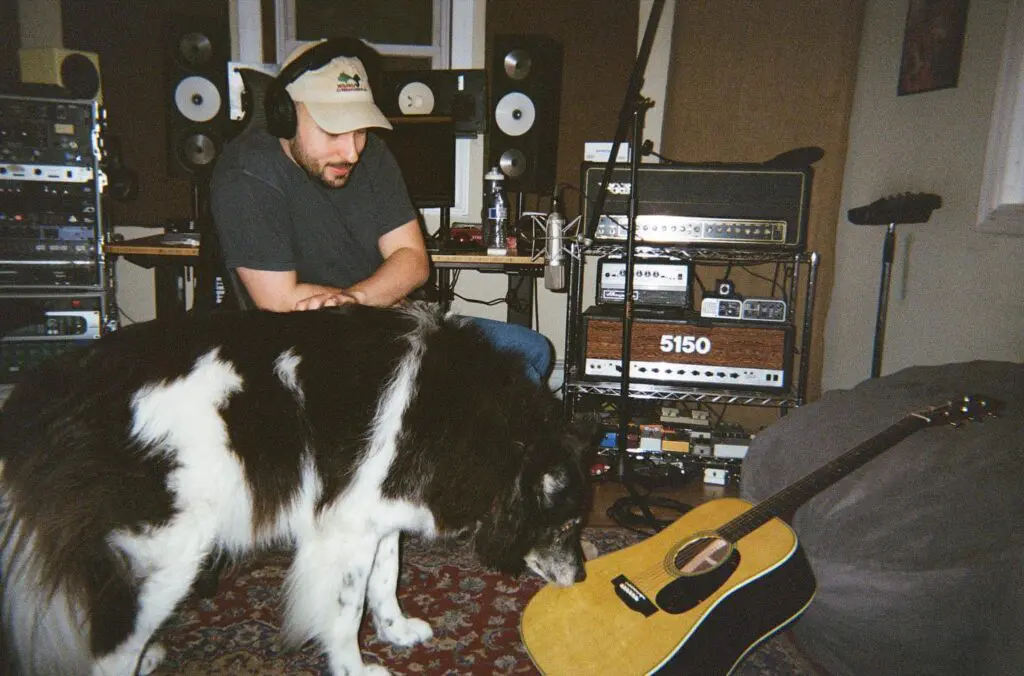
Famous for its singular spirit and drive, the great state of New Jersey has long been a hotbed of musical innovation. From Bruce Springsteen to My Chemical Romance to Jack Antonoff to SZA, the Garden State has produced a rolling field of talent that has shaped the landscape of popular music more than once.
Today, that legacy lives on in the form of the DIY and independent music scenes. With the proliferation of easy-to-access music production software, today’s producers and engineers are largely self-made, recording their own bands and mixing/mastering their own work, initially out of necessity, but then eventually out of ease and a desire for an extra level of control over their output.
That’s where people like Adam Cichocki come in.
Cichocki is a long-standing member of the New Jersey music scene. He properly started his musical journey as the drummer of former Equal Vision Records band Gatherers. Now the owner of Bayonne, NJ’s Timber Studios, Cichocki has had a major hand in revitalizing the new grunge wave that’s been taking over the alternative music space.
Between opening a second Timber location and welcoming a baby girl into the world, Cichocki’s life has changed in many ways very quickly. Still, he found time to sit down and talk with us about the history of Timber, what it’s like to run a studio, his process when working with up-and-coming artists, and how to stay creative and curious.
Drew Van Buskirk: For those who may not know you, who is Adam Cichocki? Break it down for us.
Adam Cichocki: I’m a record producer, mixer, mastering engineer, and multi-instrumentalist. I’ve been making records for 10+ years and have had the opportunity to work across a ton of genres to help shape my craft and my taste.
When I first started, it was more about figuring things out: recording bands primarily and passing off mixing and mastering to someone else who I admired. But as I progressed, I started learning those skills myself out of necessity and curiosity.
Being a musician made that easier since I was already writing and working on demos for my personal bands and I had a ton of musician friends in the area. We would play shows with and become close with super talented people so I got to work on a ton of projects back to back early on to cut my teeth and get the practice in.
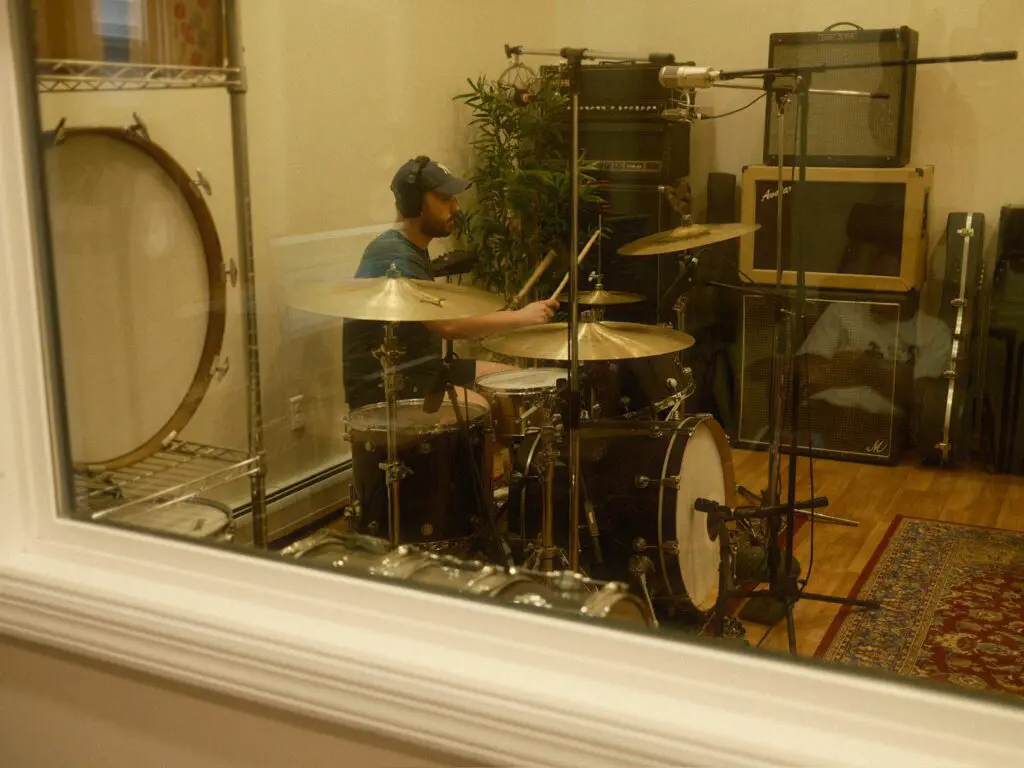
DVB: You play multiple instruments, correct?
AC: Yeah! I started on guitar when I was about eight. Played violin for a few years, bass, and a bit of piano. Later on, when my band couldn’t find a drummer, I decided to learn drums myself. I locked myself in a room for months with a metronome and jamming to a bunch of songs I loved -it became an obsession. Now, I get to be involved in every aspect of record-making, from writing to engineering to producing. I love being more than just an engineer — I want to be a creative force alongside the bands I work with and be as much of a member that the band will allow me to be.
DVB: That’s great. Do you think that kind of all-in mentality is more common on the East Coast?
AC: I do. The East Coast has a work ethic that’s very much “figure it out and do whatever you need to to make it happen.” A lot of people here start out playing in bands, recording out of necessity, and then eventually take on all aspects of the making of a record. It’s definitely a gritty, do-it-yourself mentality. I feel like some of LA has a different vibe, more network-focused, more collaborative which is awesome. But on the East Coast, especially early on, a lot of people are just grinding away andbuilding their own thing I think.
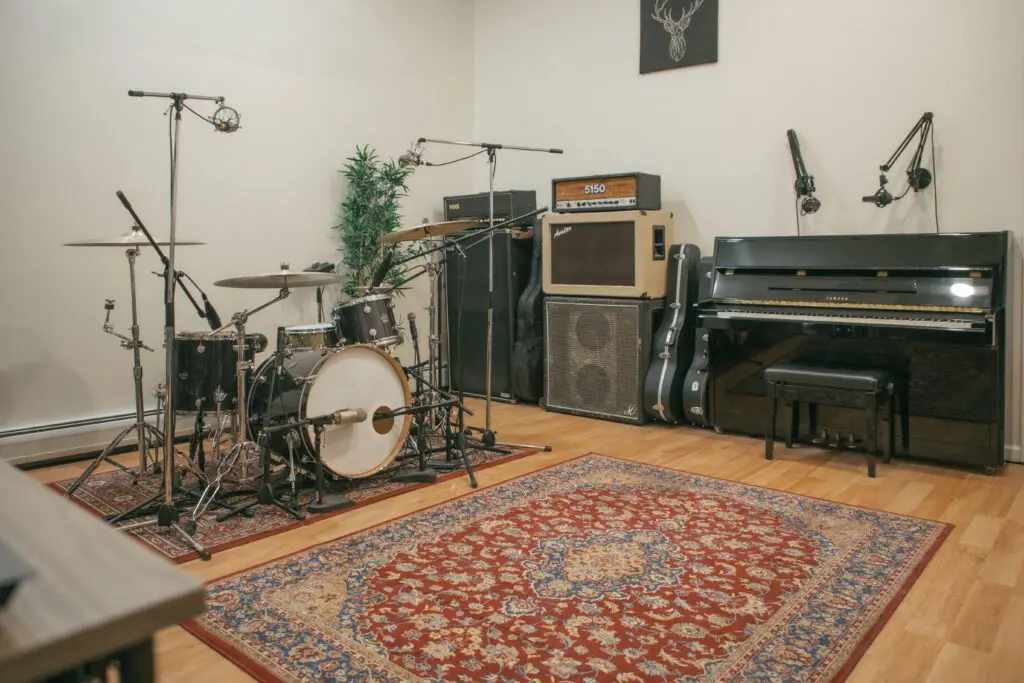
DVB: Let’s talk about Timber Studios. How did that come to be?
AC: Timber Studios started in my parents’ basement around 2010. I didn’t even have a name for it at first, it was just “Come record at Adam’s house.” (laughs) I officially named it Timber Studios in 2013 when I went full-time. The name was inspired by these giant evergreen trees outside my parents’ house; kind of a play on the word “timbre” as well. I’ve since moved locations and now have two beautiful studios in Bayonne NJ; they’re built on a foundation that started so small and modest and now have had bands from all over the world come and make amazing records here.
DVB: Love that. So, was Gatherers the first band you recorded, or were there others before that?
AC: Gatherers was one of the first serious projects. That was around 2011, before Timber was official. I was still figuring out my engineering style while also learning how to be a proficient drummer since it was my first time drumming in a band. A lot of learning curves all at once haha.
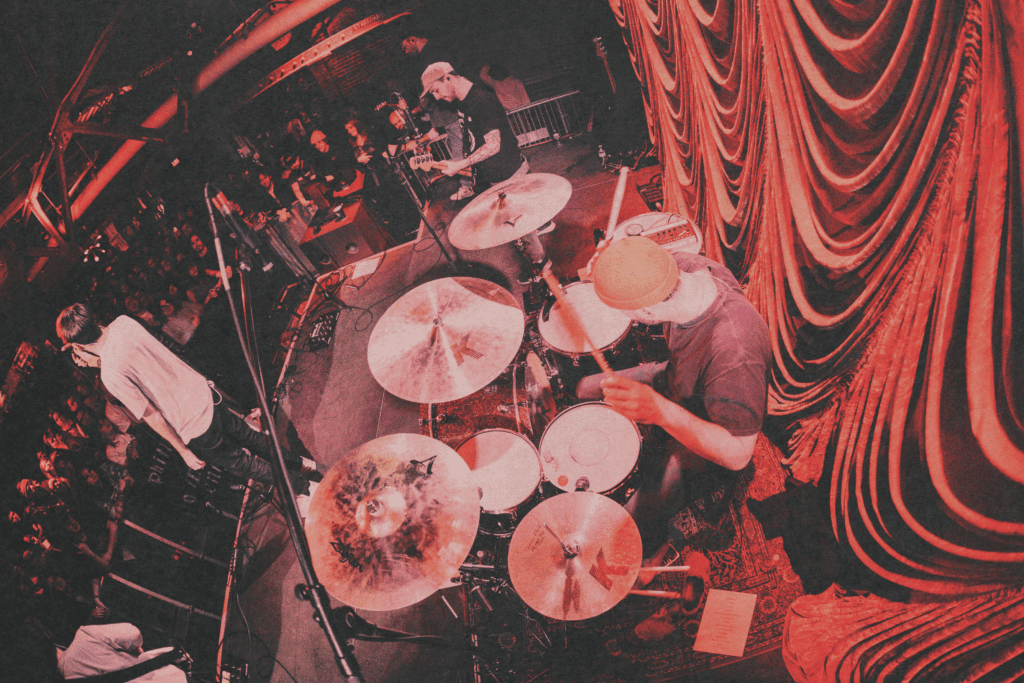
DVB: Do you remember the first project you recorded that wasn’t your own band?
AC: Yeah, I think it was a band called Hodera, a really cool group from Jersey. I met Matt from that band at a show, and we started working together. That turned into recording multiple records, and one of their songs ended up blowing up on Spotify, charting alongside massive artists and going viral. It was surreal to see something I had my hands on move in that way.
DVB: That’s wild! Do you feel like moments like that helped establish you?
AC: Definitely. Seeing something you worked on reach a wider audience than you’re used to is validating. It also reinforces the importance of capturing something real—music that resonates with people.
DVB: Soul Blind is another up-and-coming band that you started working with early on. How did you get connected with them?
AC: I met Finn from Soul Blind probably back in 2016 or so, he was in a band called Daisychain at the time. We did some songs together and from there, I got involved with Soul Blind by mastering one of their early EP’s. Years later we reconnected when my good friend Jon Markson got hit up to do their EP and he brought me into the fold to co-produce and make the record with them. It was amazing to reconnect with Finn and get to know and collaborate with the rest of the band. It also became the first of many projects Jon and I have done together. I value him greatly as a collaborator and twin brainiac haha.
Soul Blind is really in their own lane and have such a fresh take on the genres they tap into. Their sound really clicked for me and we all worked really hard to make some amazing songs together.
DVB: It seems like grunge is having a moment again.
AC: Yeah, people are hungry for unfiltered and engaging music. I think there was a time where everything that was coming out was so rigid / doctored and perfect, that now hearing a band just absolutely rip in an authentic way that reflects the way they kill it live, people are connecting . Soul Blind captures that energy so well.

DVB: What’s your approach when working with a band like that?
AC: It’s about letting them be themselves but helping refine their vision in whatever ways that needs to happen. Every band has a sound they’re chasing in their heads, and my job is to help them get there in the most fulfilling way possible.. Collaboration is key — I don’t just want to be an engineer hitting ‘Record’. I want to be actively shaping the record with them as much as they’ll let me.
DVB: What do you think makes a great record?
AC: Capturing emotion. A record should feel alive. That comes from creating the right environment in the studio where the band feels comfortable pushing themselves. Technical skills are important, but at the end of the day, music is about feeling.
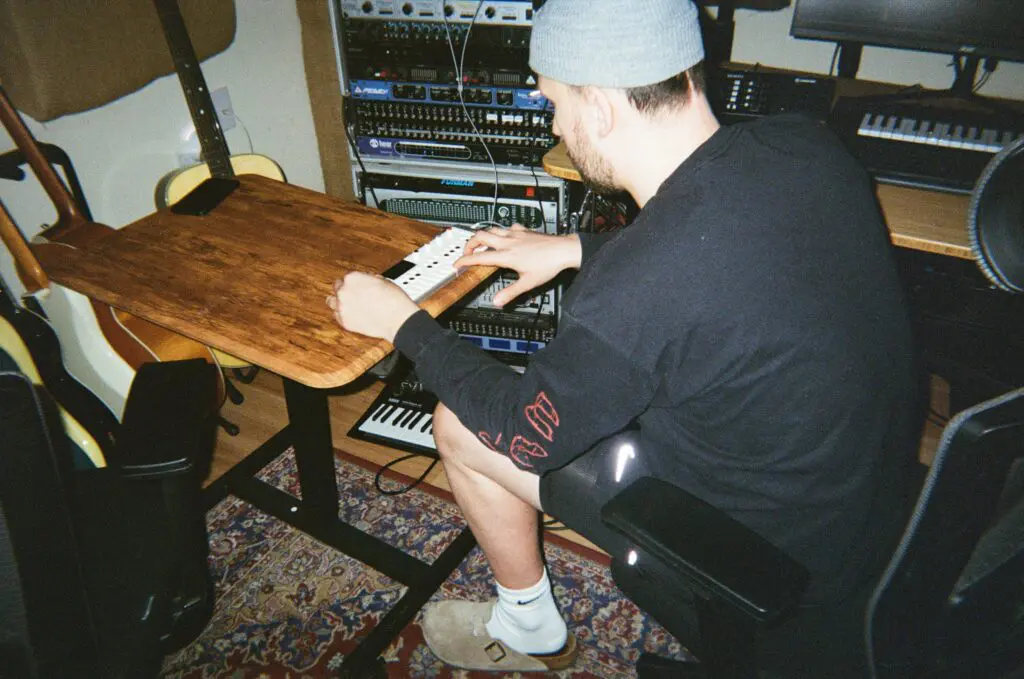
DVB: How do you stay inspired?
AC: Working with different artists across a lot of genres keeps me inspired. I also try to listen to a lot of different music and get out of my comfort zone, stay curious, and constantly learn new techniques. It’s important to keep growing.
DVB: Any advice for aspiring producers?
AC: Keep it dangerous and trust your gut. Be patient, keep learning, and surround yourself with people who challenge you and inspire you.
For more information on Timber Studios, visit their website.